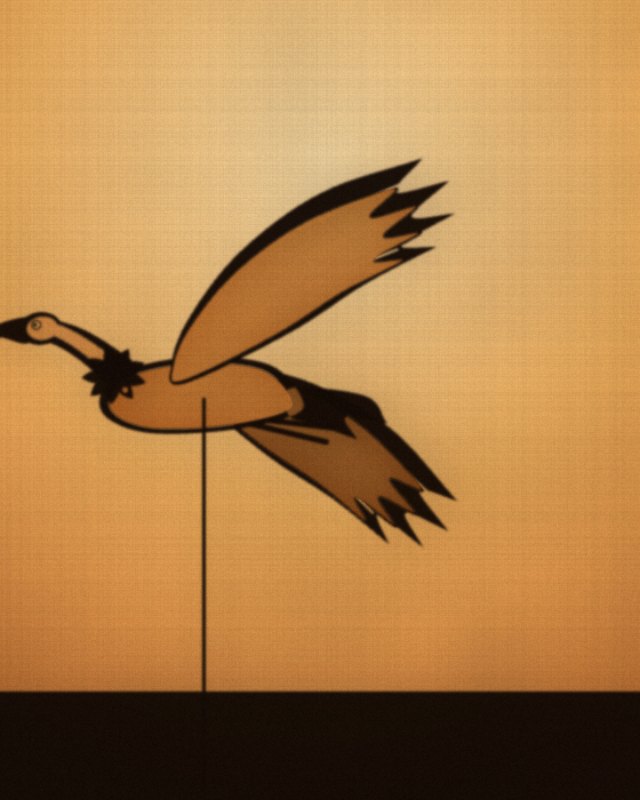
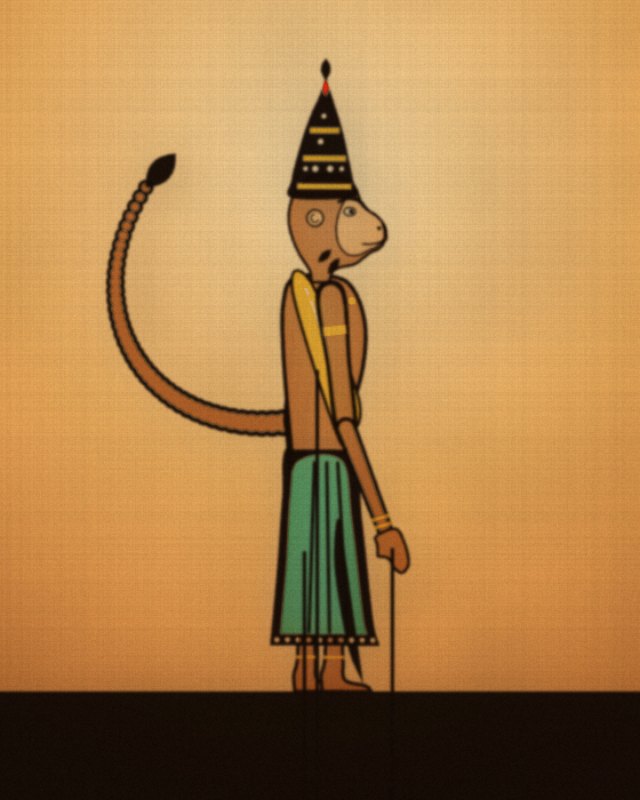
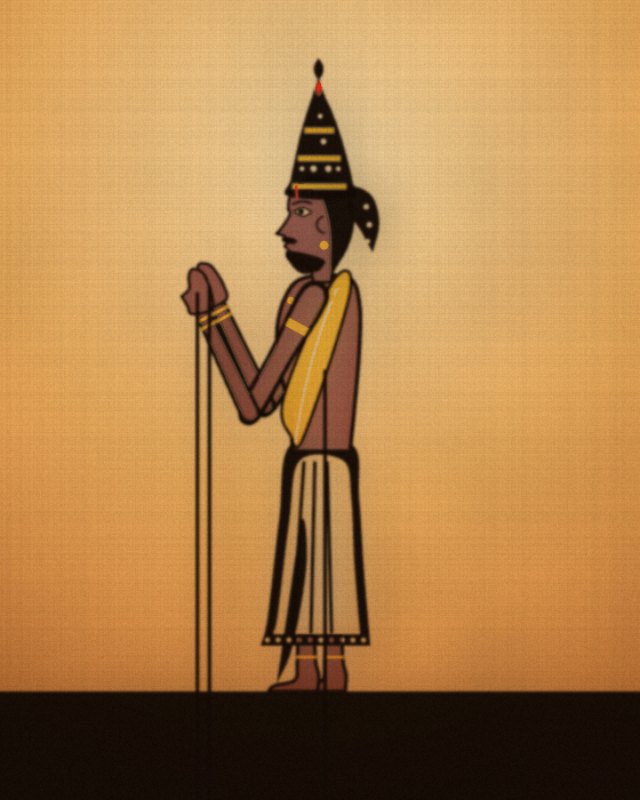
22 minutes 17 seconds, in Hindi with English subtitles. Plays from YouTube, where it is also available to watch.
सर्ग-दर-सर्गSarga by sarga
The film is the overview. The full Valmiki Ramayana, kanda by kanda and sarga by sarga, is on the श्लोकछाया · Shlokachhaya channel: all 645 sargas in 56 parts, about 14 h 27 min, in the same shadow puppets, with Hindi narration and English subtitles.
१बालकाण्डBala Kanda6 parts · sargas 1–77 · 1 h 25 min
1आदि-श्लोकThe First ShlokaSargas 1–4 · 12:26
2पुत्रकामेष्टिThe Sacrifice for SonsSargas 5–17 · 13:34
3विश्वामित्रVishvamitraSargas 18–30 · 13:38
4गंगा का अवतरणThe Descent of the GangaSargas 31–47 · 15:28
5अहल्या और ब्रह्मर्षिAhalya, and the BrahmarshiSargas 48–65 · 14:58
6शिव-धनुषShiva's BowSargas 66–77 · 14:28
२अयोध्याकाण्डAyodhya Kanda10 parts · sargas 1–119 · 2 h 34 min
1युवराजThe HeirSargas 1–6 · 15:00
2कैकेयी के दो वरKaikeyi's Two BoonsSargas 7–14 · 16:00
3राम दो बार नहीं बोलतेRama Does Not Speak TwiceSargas 15–25 · 15:34
4वन की ओरInto ExileSargas 26–40 · 15:20
5गंगा पारAcross the GangaSargas 41–56 · 15:22
6दशरथ का शापDasharatha's CurseSargas 57–68 · 16:03
7भरत का लौटनाBharata ReturnsSargas 69–79 · 15:26
8भरत की यात्राBharata's JourneySargas 80–92 · 15:42
9चित्रकूट में मिलनThe Meeting at ChitrakutaSargas 93–104 · 14:43
10पादुकाएँThe SandalsSargas 105–119 · 14:52
३अरण्यकाण्डAranya Kanda7 parts · sargas 1–75 · 1 h 42 min
1दंडक वनThe Dandaka ForestSargas 1–10 · 13:49
2अगस्त्य और पंचवटीAgastya and PanchavatiSargas 11–16 · 14:52
3जनस्थानJanasthanaSargas 17–30 · 14:06
4स्वर्ण मृगThe Golden DeerSargas 31–44 · 14:43
5सीता हरणSita TakenSargas 45–56 · 14:29
6जटायुJatayuSargas 57–68 · 14:15
7कबंध और शबरीKabandha and ShabariSargas 69–75 · 15:22
४किष्किन्धाकाण्डKishkindha Kanda7 parts · sargas 1–67 · 1 h 44 min
1पम्पा और हनुमानPampa and HanumanSargas 1–8 · 14:29
2वालीValiSargas 9–16 · 14:16
3वाली का प्रश्नVali's QuestionSargas 17–24 · 13:44
4वर्षा ऋतुThe RainsSargas 25–30 · 14:32
5लक्ष्मण का क्रोधLakshmana's AngerSargas 31–39 · 15:15
6चारों दिशाएँThe Four DirectionsSargas 40–52 · 14:21
7सम्पातिSampati and the SeaSargas 53–67 · 17:37
५सुन्दरकाण्डSundara Kanda7 parts · sargas 1–68 · 1 h 54 min
1महा-छलाँगThe LeapSarga 1 · 20:38
2रात की लंकाLanka by NightSargas 2–13 · 16:27
3अशोक वाटिकाThe Ashoka GroveSargas 14–29 · 16:17
4राम का संदेशRama's RingSargas 30–40 · 18:34
5जयत्यतिबलो रामःVictory to RamaSargas 41–48 · 14:49
6लंका दहनLanka BurnsSargas 49–56 · 13:33
7दृष्टा सीताSita Is FoundSargas 57–68 · 13:13
६युद्धकाण्डYuddha Kanda12 parts · sargas 1–128 · 3 h 12 min
1विभीषणVibhishana's CounselSargas 1–16 · 13:46
2शरणागति और सेतुRefuge, and the BridgeSargas 17–23 · 15:23
3युद्ध से पहलेBefore the WarSargas 24–41 · 16:12
4नागपाशThe Serpent NooseSargas 42–50 · 16:24
5रावण युद्धभूमि मेंRavana Takes the FieldSargas 51–59 · 16:41
6कुम्भकर्णKumbhakarnaSargas 60–68 · 16:25
7औषधि-पर्वतThe Mountain of HerbsSargas 69–80 · 16:05
8इन्द्रजितIndrajitSargas 81–91 · 15:28
9रावण का शक्ति-प्रहारRavana's SpearSargas 92–104 · 16:07
10आदित्य हृदयThe Heart of the SunSargas 105–113 · 16:30
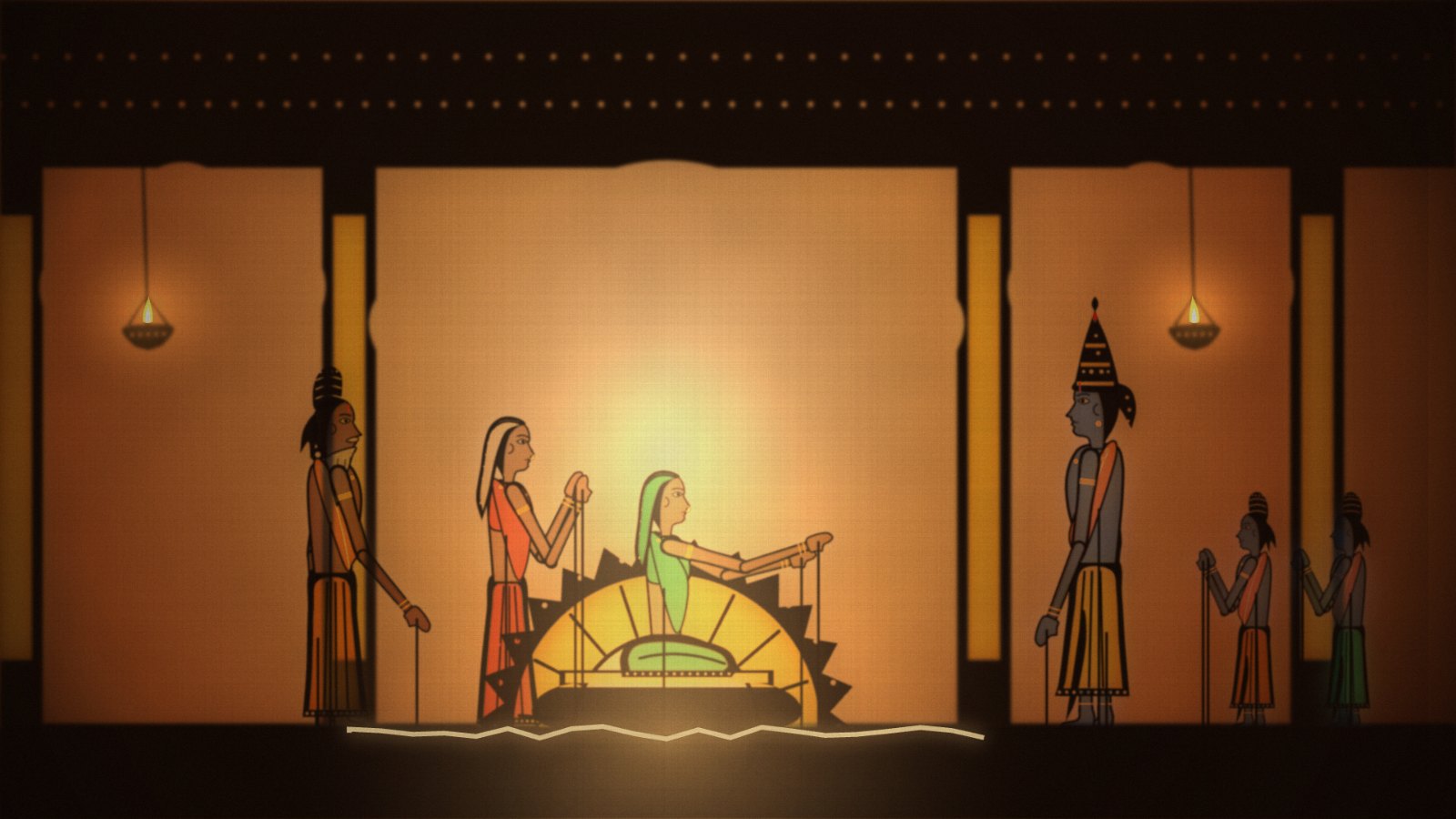
11अग्नि-परीक्षाThrough the FireSargas 114–120 · 15:34
12राज्याभिषेकThe CoronationSargas 121–128 · 16:58
७उत्तरकाण्डUttara Kanda7 parts · sargas 1–111 · 1 h 57 min
1रावण का जन्मThe Making of RavanaSargas 1–16 · 16:37
2दिग्विजय और हनुमान का बचपनConquests, and Hanuman's ChildhoodSargas 17–36 · 16:59
3सीता का त्यागSita Sent AwaySargas 37–52 · 16:16
4लव-कुश का जन्मThe Twins Are BornSargas 53–72 · 16:30
5शम्बूक और दंडकShambuka, and the Dandaka ForestSargas 73–90 · 16:33
6धरती की गोदInto the EarthSargas 91–98 · 16:42
7सरयूThe SarayuSargas 99–111 · 17:28
सात काण्डThe seven kandas
Valmiki's Ramayana is told in seven books, or kandas. The film follows all seven, from Rama's birth to his return to his eternal home.
१
बालकाण्डBala Kanda, the Book of Childhood
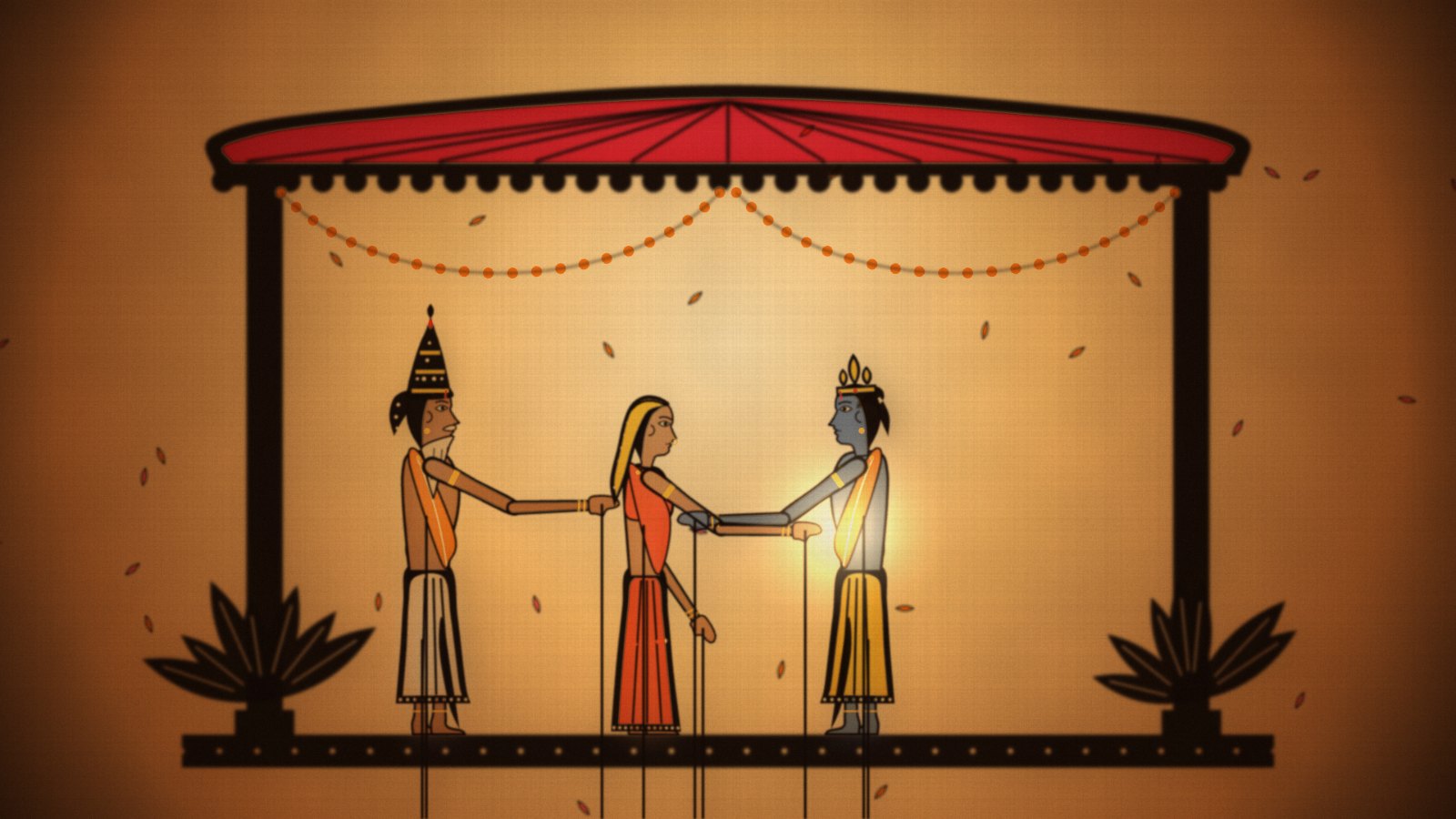
Valmiki's grief for a krauncha bird becomes the first shloka. In Ayodhya, King Dasharatha's sacrifice brings four sons. With the sage Vishvamitra, Rama and Lakshmana guard a sacrifice and free Ahalya, and in Mithila Rama breaks the bow of Shiva and marries Sita.
२
अयोध्याकाण्डAyodhya Kanda, the Book of Ayodhya
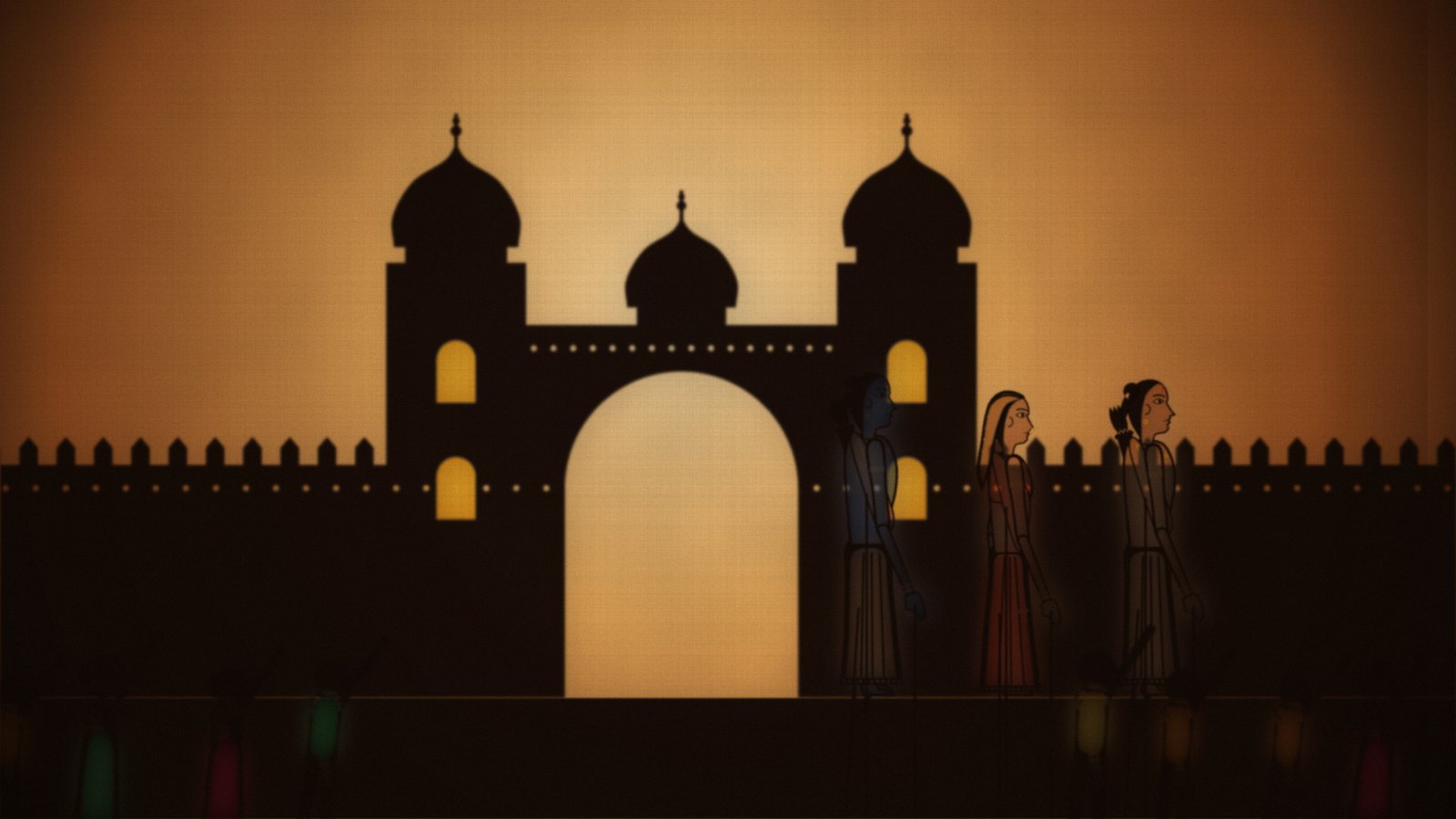
On the eve of Rama's coronation, Kaikeyi claims her two boons: the throne for Bharata, and fourteen years in the forest for Rama. Rama leaves with Sita and Lakshmana, and Dasharatha dies of grief. Bharata will not take the throne, and rules from Nandigrama with Rama's sandals upon it.
३
अरण्यकाण्डAranya Kanda, the Book of the Forest
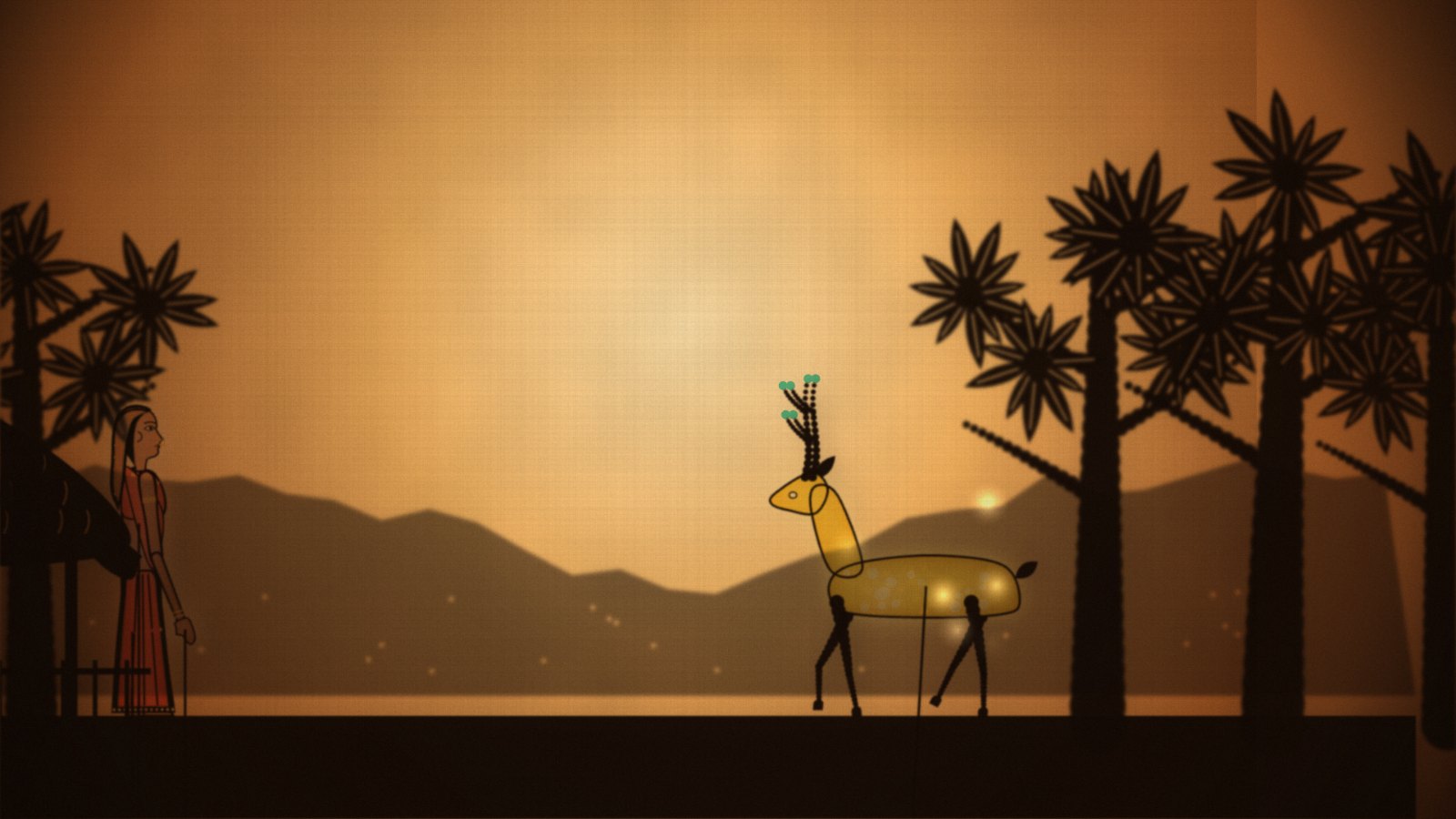
In the Dandaka forest, Rama protects the sages and defeats Khara's army. Ravana sends Maricha as a golden deer and carries Sita away. Jatayu dies fighting him, and Shabari's long wait ends when Rama comes to her hermitage.
४
किष्किन्धाकाण्डKishkindha Kanda, the Book of Kishkindha
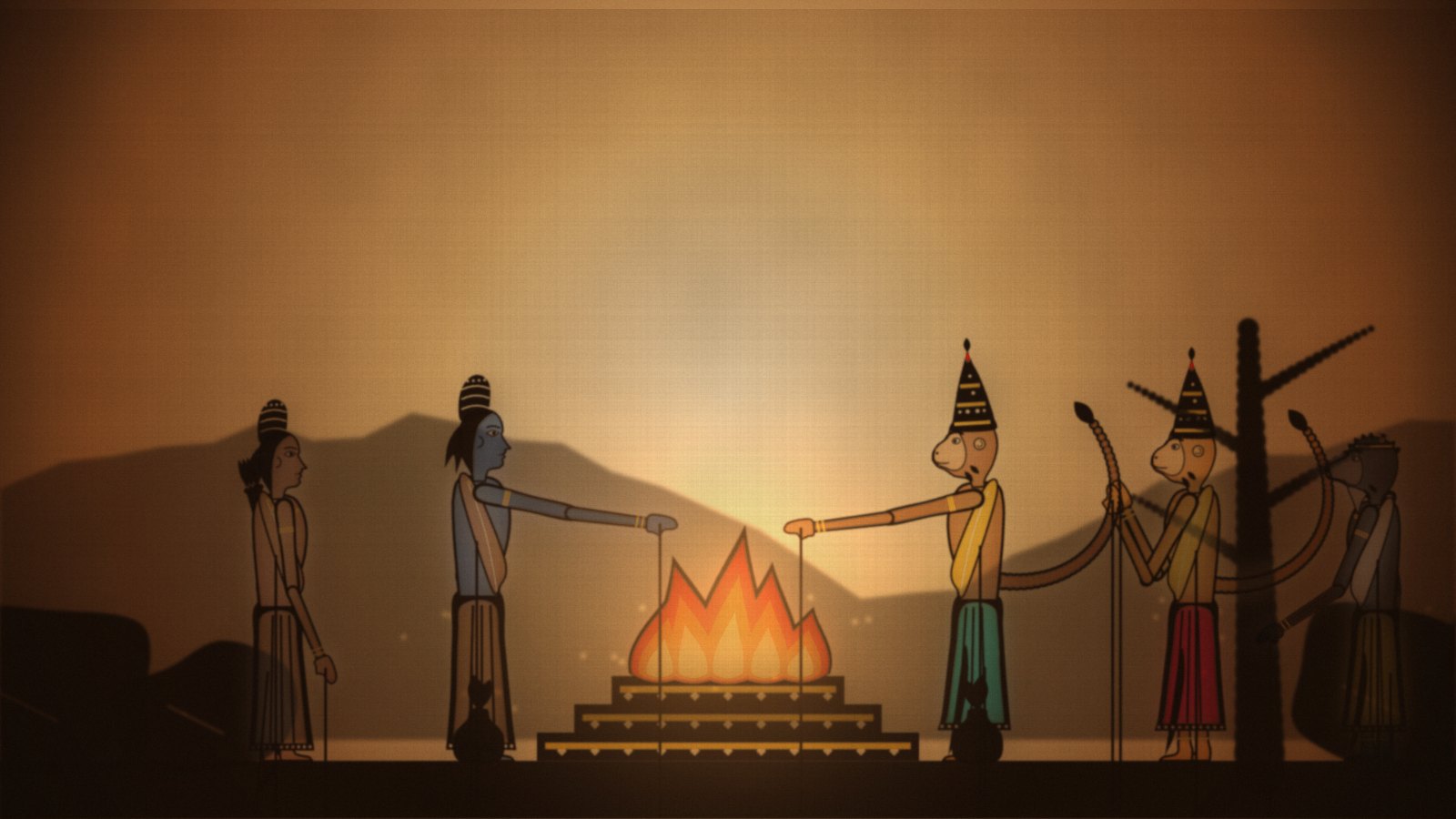
Hanuman brings Rama and Lakshmana to Sugriva, and the two swear friendship before fire. Rama kills Vali, and Sugriva is crowned. The vanaras search in every direction until Sampati tells them that Sita is in Lanka.
५
सुन्दरकाण्डSundara Kanda, the Beautiful Book
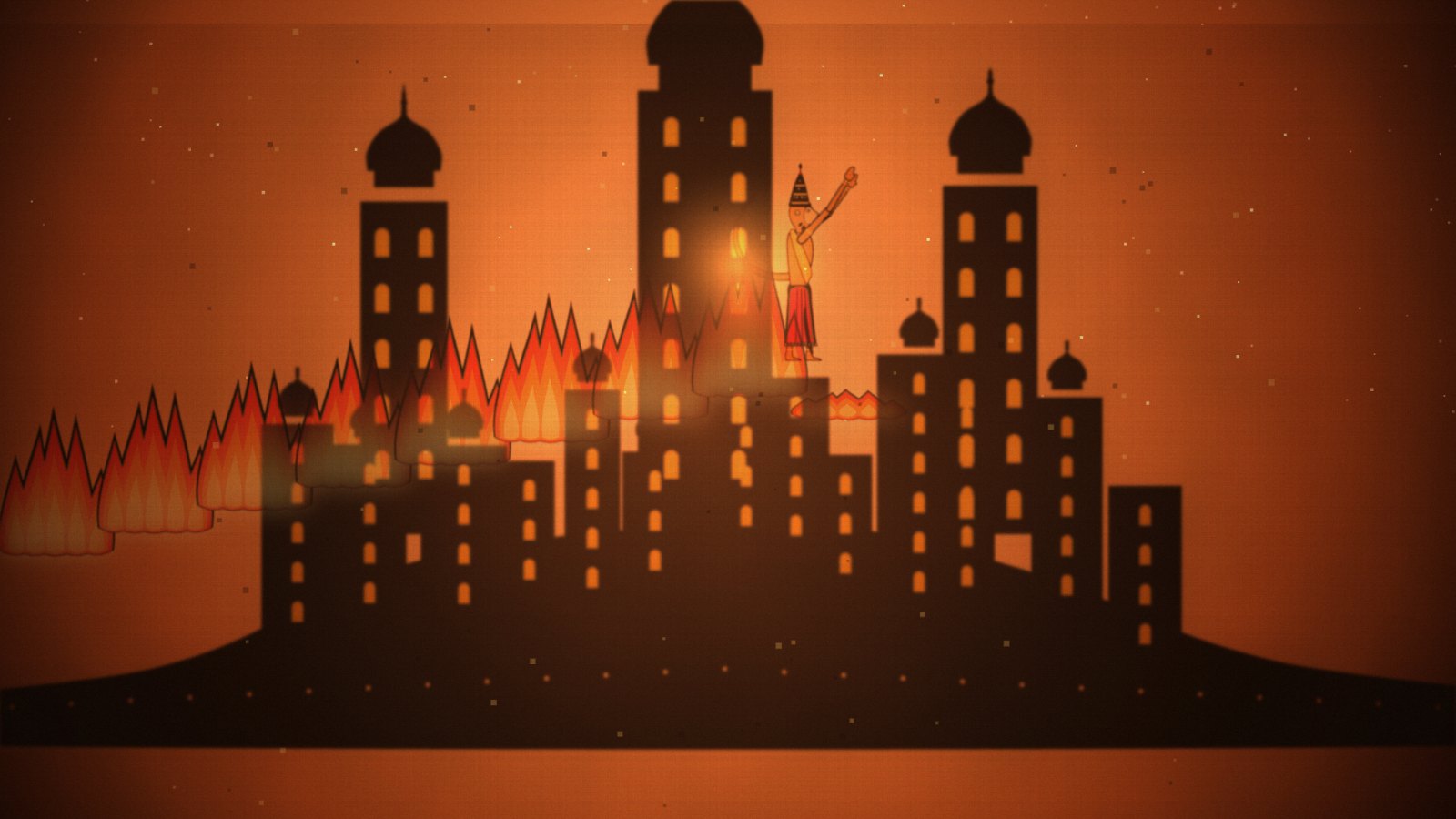
Hanuman leaps the ocean, finds Sita in the Ashoka grove and gives her Rama's ring. Taken before Ravana, he warns him to return her, then sets Lanka ablaze with his burning tail and carries Sita's chudamani back to Rama.
६
युद्धकाण्डYuddha Kanda, the Book of War
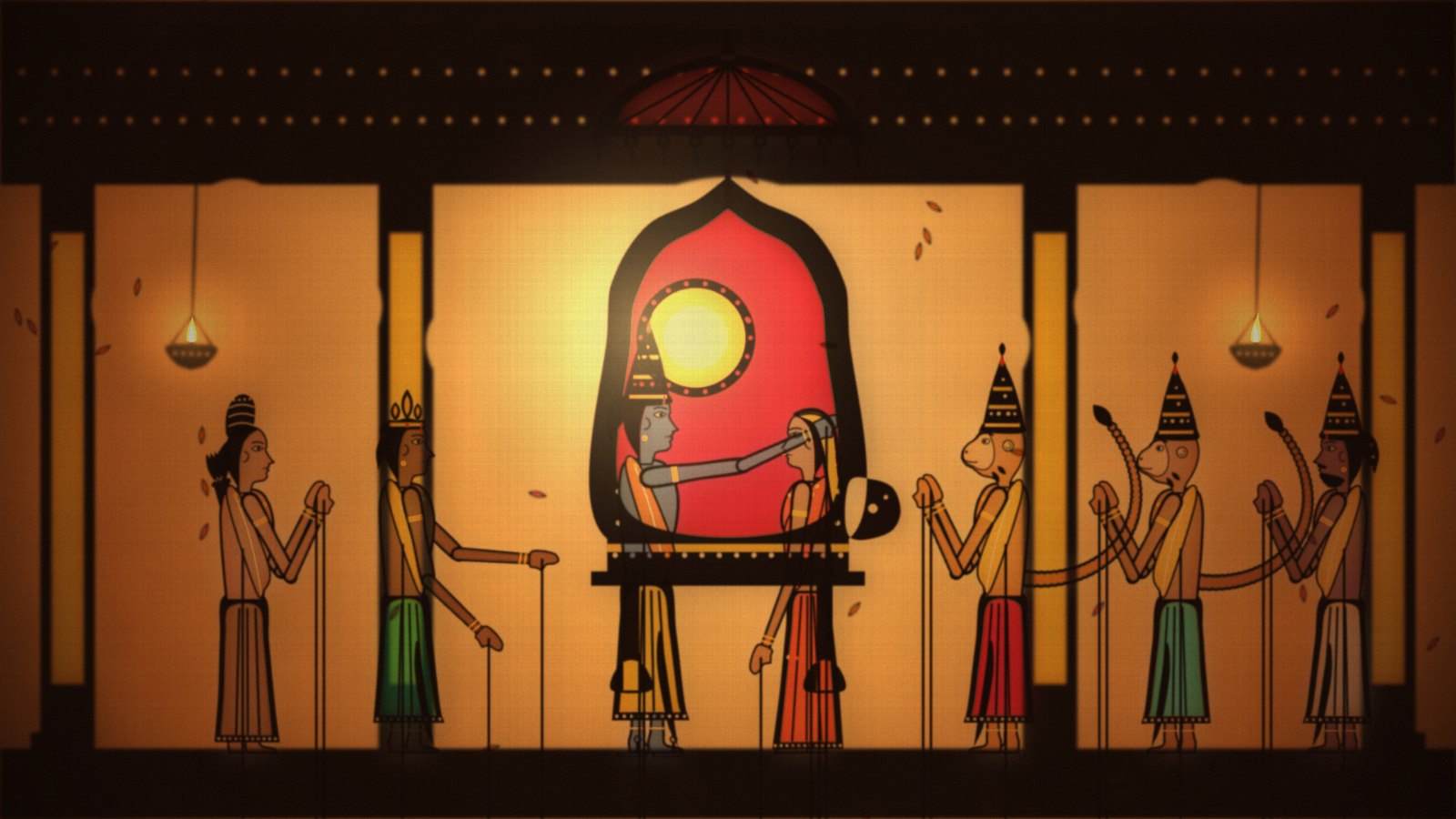
Vibhishana joins Rama, the vanaras bridge the sea, and the war for Lanka begins. Kumbhakarna and Meghanada fall, and Hanuman carries a mountain peak to save Lakshmana. Rama slays Ravana with the Brahmastra, Sita passes through fire, and Rama is crowned in Ayodhya.
७
उत्तरकाण्डUttara Kanda, the Last Book
Whispers in Ayodhya lead Rama to send Sita away, and she gives birth to Lava and Kusha in Valmiki's hermitage. Years later the twins sing the Ramayana at Rama's horse sacrifice. Sita returns to Mother Earth, Rama enters the Sarayu, and Brahma's blessing closes the film.
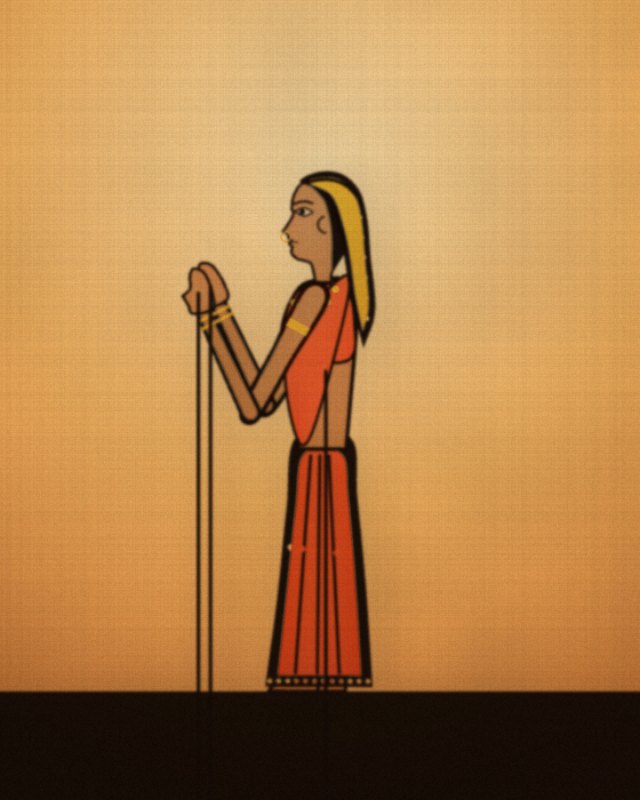
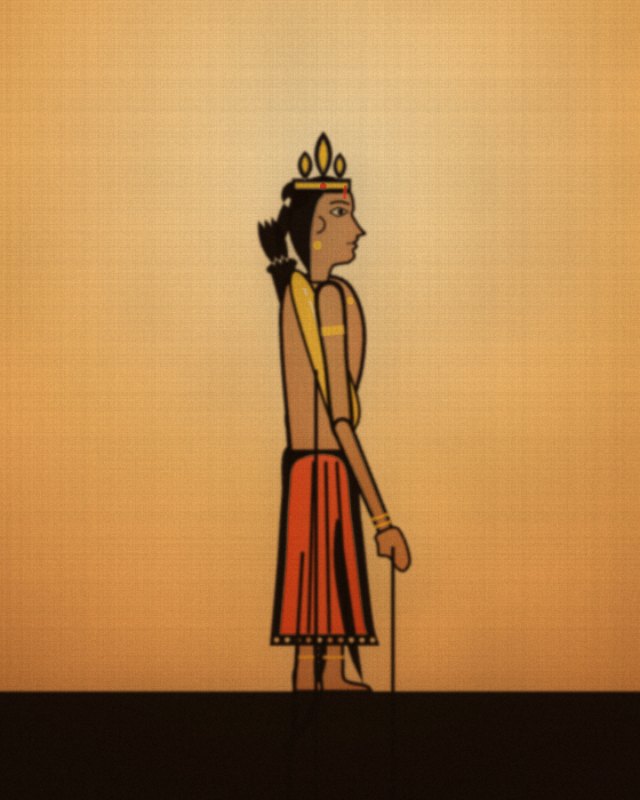
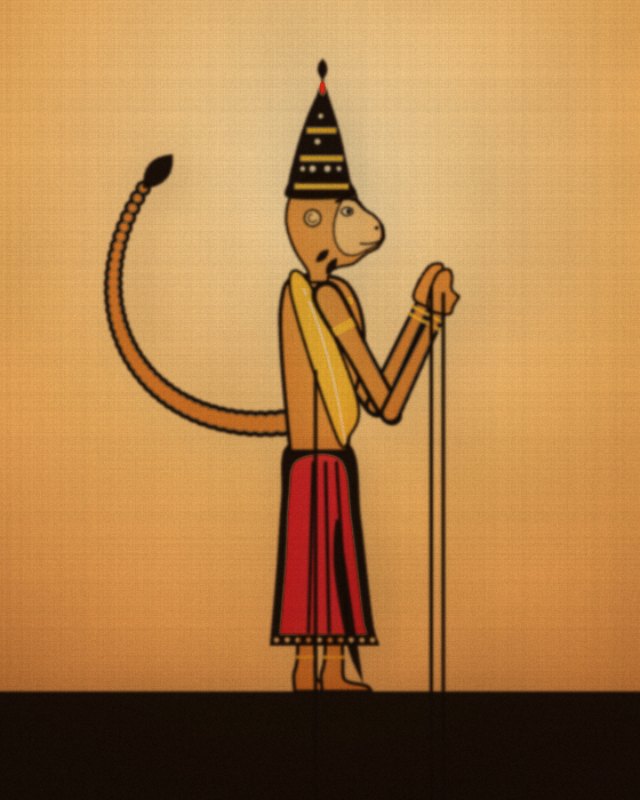
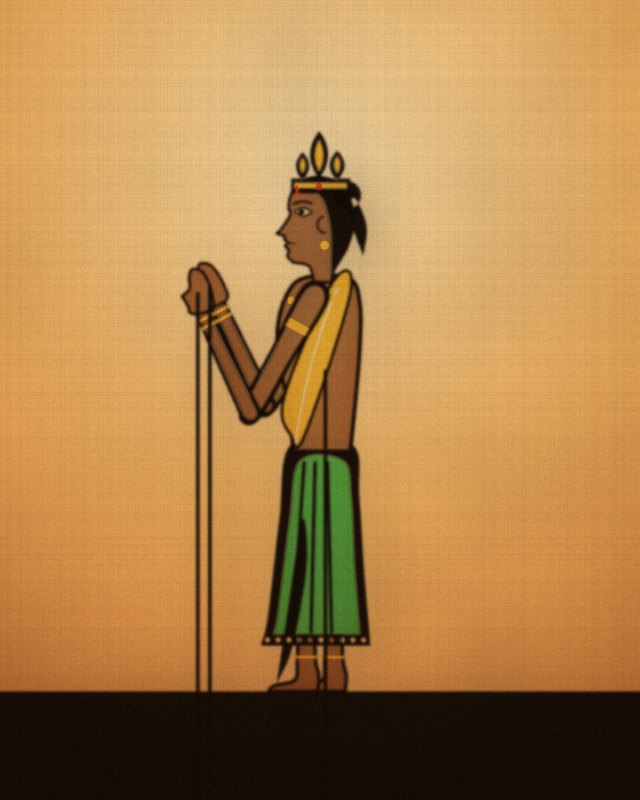
पात्रCharacters
Each puppet is cut and painted in code. Skin tones follow the descriptions in the text, which is why Rama, whom Valmiki calls shyama, is blue-grey.
रामRama
Eldest son of King Dasharatha. Valmiki calls him shyama, dark as a rain cloud.
सीताSita
Daughter of King Janaka, found in a furrow as he ploughed the ground for a sacrifice. She chose exile at Rama's side.
लक्ष्मणLakshmana
Sumitra's son, who never left Rama's side through fourteen years in the forest.
हनुमानHanuman
Son of the Wind and minister to Sugriva. He crossed the ocean to find Sita and carried a mountain peak to save Lakshmana.
भरतBharata
Kaikeyi's son, who would not take the throne won for him, and ruled from Nandigrama with Rama's sandals upon it.
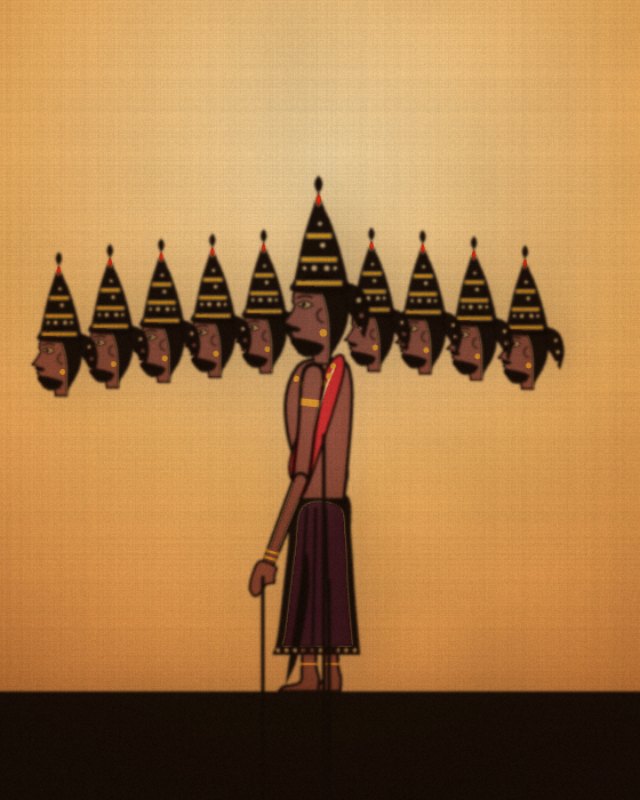
रावणRavana
The ten-headed king of Lanka, who carried Sita away and would not return her.
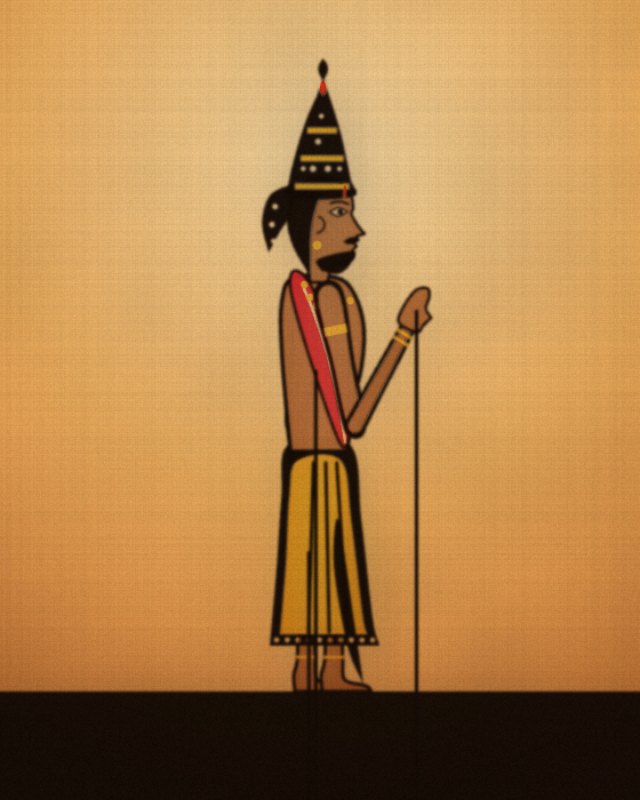
दशरथDasharatha
King of Ayodhya, bound by the two boons he once granted Kaikeyi. He died of grief for Rama.
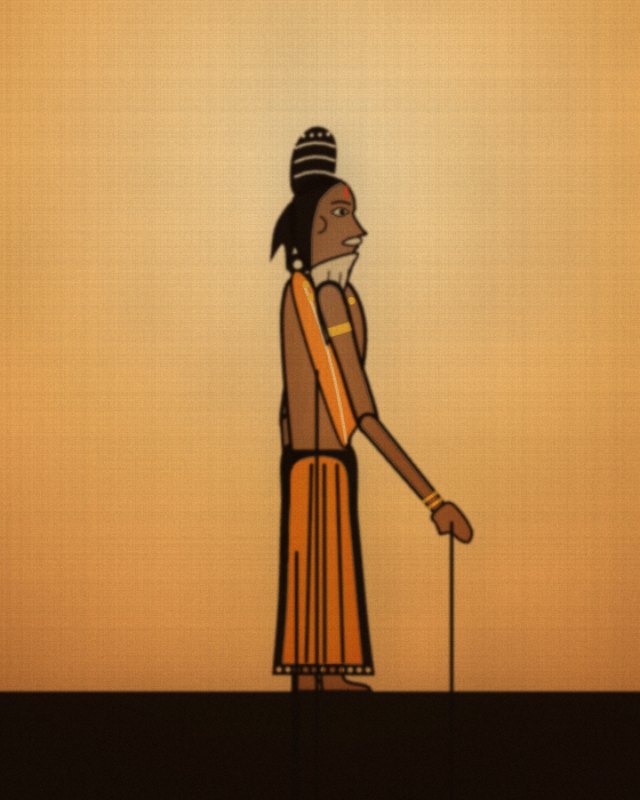
विश्वामित्रVishvamitra
The sage who took young Rama and Lakshmana to guard his sacrifice, and taught them the lore of Bala and Atibala.
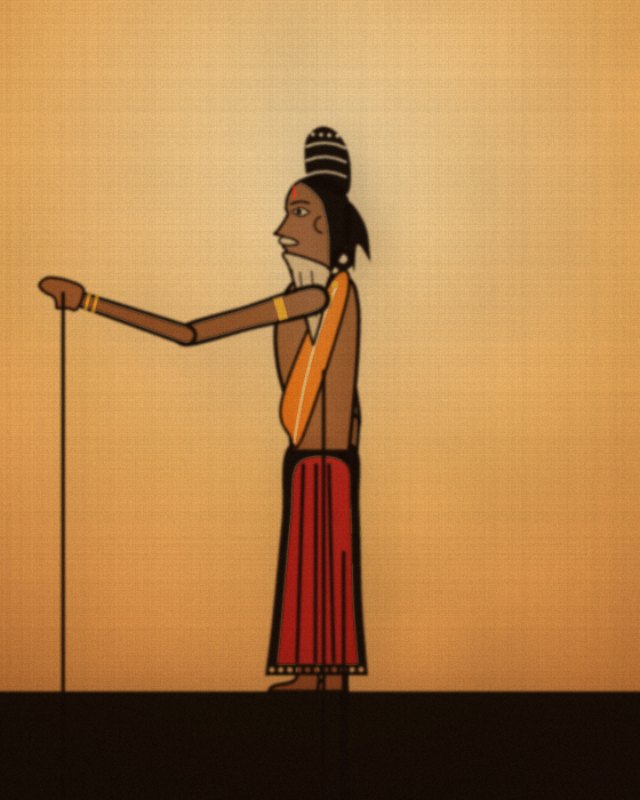
वाल्मीकिValmiki
The sage whose grief became the first shloka. He sheltered Sita and taught her sons to sing the Ramayana.
जटायुJatayu
King of the vultures and an old friend of Dasharatha, who gave his life trying to stop Ravana.
सुग्रीवSugriva
Vanara king of Kishkindha. He and Rama swore friendship with fire as their witness.
विभीषणVibhishana
Ravana's brother, who begged him to return Sita and then sought refuge with Rama. He became king of Lanka.
वाल्मीकि के अनुसारFollowing Valmiki
Later retellings, songs and television have added and changed much. Where they differ, this film keeps to Valmiki's Ramayana.
Often toldIn Valmiki's Ramayana
Often toldAhalya is turned to stone, and the touch of Rama's foot brings her back.
In ValmikiGautama's curse leaves Ahalya unseen by the world, living on air in the hermitage. Rama's arrival frees her.
Often toldParashurama storms into the assembly as soon as Shiva's bow breaks.
In ValmikiHe meets Rama on the road home, after the weddings, and challenges him with the bow of Vishnu.
Often toldKevat the boatman washes Rama's feet before ferrying him over the Ganga.
In ValmikiGuha, chief of the Nishadas, welcomes them and has a boat brought to carry them across.
Often toldLakshmana draws a protective line around the hut before he leaves Sita.
In ValmikiThere is no line. Stung by Sita's words, Lakshmana goes to find Rama, and Ravana comes to the door as an ascetic.
Often toldShabari offers Rama berries she has tasted first, to be sure they are sweet.
In ValmikiAfter years of waiting, Shabari welcomes Rama and Lakshmana with fruits and roots she has gathered.
Often toldMeghanada's weapon strikes Lakshmana down, and the Sanjeevani herb revives him.
In ValmikiLakshmana has already slain Meghanada. Ravana's spear fells him, and the vanara healer Sushena treats him with herbs from the peak Hanuman carries back.
Often left outThe final battle goes straight to Ravana's fall.
In ValmikiAs Rama tires, the sage Agastya comes to the battlefield and teaches him the Aditya Hridayam, the hymn to the Sun.
Often toldVibhishana reveals the nectar hidden in Ravana's navel, and Rama's arrows dry it up.
In ValmikiMatali, Indra's charioteer, reminds Rama of the Brahmastra. It pierces Ravana's heart and returns to Rama.
Often toldThe trial by fire passes without Rama's reasons, or the Sita who was taken is only a shadow of her.
In ValmikiRama speaks harshly before everyone, and Agni returns Sita from the flames. Then Rama says he always knew she was pure, and that she is as inseparable from him as light is from the sun.
Often left outBharata simply hands the kingdom back.
In ValmikiBharata himself places the sandals back on Rama's feet before the coronation.
Often left outRama's life after Sita leaves is passed over.
In ValmikiRama never marries again. At his horse sacrifice, a golden image of Sita sits in the wife's place.
यह फ़िल्म कैसे बनीHow the film was made
There is no camera and no hand-drawn frame in this film. Every puppet, set and movement is drawn by a program, and the program draws them the way India's leather puppets are made: dark leather, punched holes, translucent painted panels and the rods that move them, lit from behind by a lamp.
The film runs 22 minutes 17 seconds, with 138 lines of narration and dialogue, about 5,100 lines of drawing code and 40,103 frames.
Orchestration
Claude Code orchestrated everything: it wrote the script and all of the code, ran every tool below, and checked each asset before it went into the film.
Script
Claude Code wrote the 138 lines of Hindi narration and dialogue, following Valmiki's Ramayana, each with an English subtitle.
Narration and voices
ElevenLabs Eleven v4 recorded the narrator and the voices of Rama, Sita, Ravana and Hanuman.
Word timing
ElevenLabs Scribe transcribed every take with word-level timestamps, so each scene, sound and subtitle lands on the right word. Shiva's bow snaps on टूट, "broke".
Puppets and sets
A shadow-puppet stage written in JavaScript draws every figure and set on an HTML canvas: translucent leather on rods, lit from behind by a flickering lamp.
Frames
Puppeteer drove headless Chrome to draw all 40,103 frames at 1920 by 1080, and FFmpeg encoded them to video.
Music
Eleven Music composed a score for each kanda, and Python and FFmpeg re-timed it to the final edit.
Sound effects
ElevenLabs sound effects made the arrows, conches, bells, fire and crowds, and Python placed each one on its cue word.
Subtitles
The English subtitles are drawn into the picture on the same canvas, timed from Scribe's word timings.
Mix and master
FFmpeg mixed the narration, music and effects, ducked the score under the voices and normalised the loudness.
Final film and thumbnail
FFmpeg joined the seven kandas into the 22:17 film, and the YouTube thumbnail was rendered from the film's stage with Puppeteer.
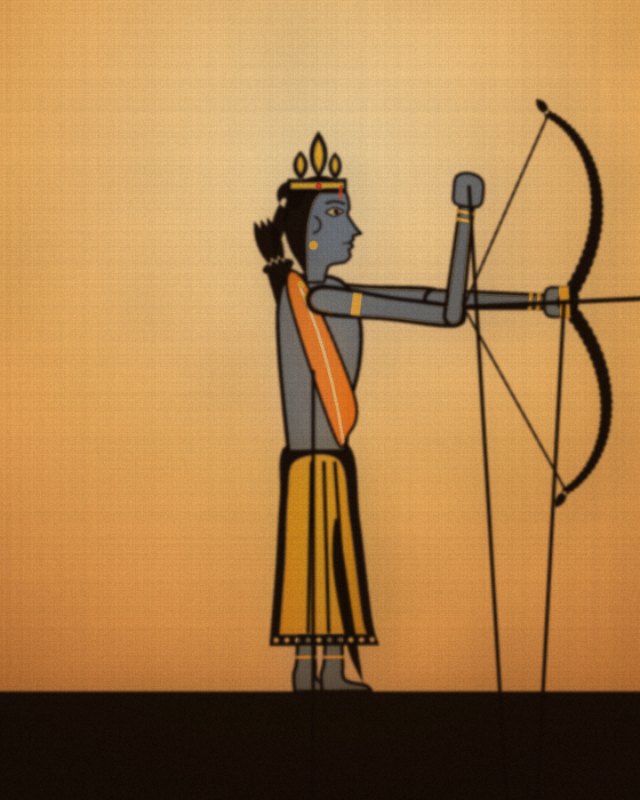
// the archer's pose: string drawn back by d (0..1)
ARMS.archer = (d, a = 0, o = {}) => ({
  far: { r1: -1.5 - a, r2: 0, hand: 'grip',
         item: R.bow(o.h || 330, { draw: d, reach: 160 }) },
  near: { r1: -1.4 - a, r2: lerp(-0.1, -2.78, d), hand: 'grip' },
});
Rama's archer pose in the film's code, and the puppet it draws. The value d is how far the string is drawn back.
The look comes from India's shadow-puppet traditions. Tholpavakoothu in Kerala, Togalu Gombeyata in Karnataka, Tholu Bommalata in Andhra Pradesh and Ravanachhaya in Odisha have played the Ramayana by lamplight for centuries, with figures of leather held against a cloth screen.